Socotra’s isolation and varied environments have helped shape many species with exceptionally restricted ranges. UNESCO records notable levels of endemism among native plants, reptiles and land snails. Protecting a geographically small habitat can thus preserve evolutionary history that cannot be found anywhere else.
Why the word endemic matters
An endemic species has a naturally restricted geographical range. A species only found on an island cannot be conserved somewhere else simply by protecting a similar landscape on another continent. Socotra’s distinct flora and fauna, shaped by long isolation and varied habitats, illustrate the importance of a place’s unique natural history.
Landscape and life belong together
Socotra is not just a collection of unusual organisms. The islands include distinct environments, and their physical geography influences where different forms of life occur. Dragon’s blood trees, with broad umbrella-like crowns, are a particularly striking reminder of how different a familiar category such as “tree” can look in another environment.
Protecting a small part of a large planet
A tiny range can make a species vulnerable to changes within a small area. Conservation researchers therefore care about habitat extent, fragmentation and the pressures on ecosystems, as well as how many species exist. Percentages in a description are a starting point; different surveys and classifications can update the inventories over time.
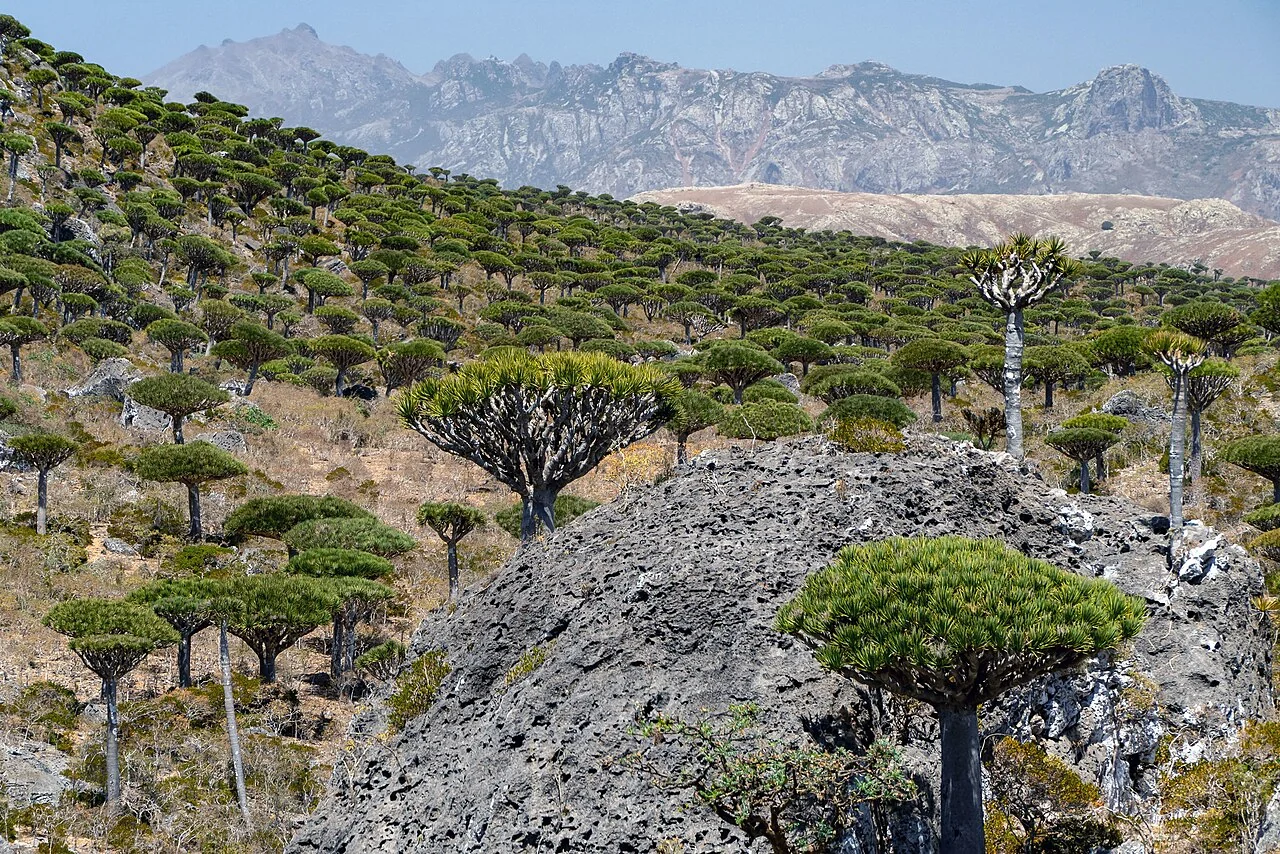

Think about it: If a species is only found on Socotra, does that necessarily mean there are very few individuals?
No. Endemism describes the geographical range rather than the total population. A species can be locally numerous and still exist nowhere else naturally.
Read more: UNESCO World Heritage Centre: Socotra Archipelago.