Far out in the Pacific, the volcanic Galápagos Islands support terrestrial and marine environments whose isolation has inspired generations of naturalists. They show how geography, environmental conditions and the historical movement of organisms shape which species live in a place. Different island environments encourage different patterns of life.
The experiment that nature set up
Volcanic islands can begin as isolated land surfaces surrounded by water. The plants and animals found there are influenced by which ancestors arrived, where those arrivals established populations and how conditions differed among islands. This makes island groups compelling places to study patterns of natural history.
A family across different islands
A connected population may become separated when individuals no longer regularly move between habitats. Over many generations, chance events and environmental differences can produce different populations. Researchers compare anatomy, behavior, fossils where available and genetic evidence to reconstruct those relationships; modern species are not simply snapshots of an ancestral animal unchanged.
More than a Darwin story
The surrounding ocean is as important as the land. Currents, temperatures, local habitats and seasonality influence what life can flourish. The Galápagos are also a modern home and conservation challenge. Protecting distinctive ecosystems involves maintaining human livelihoods and minimizing damage, not imagining that the islands exist outside human history.
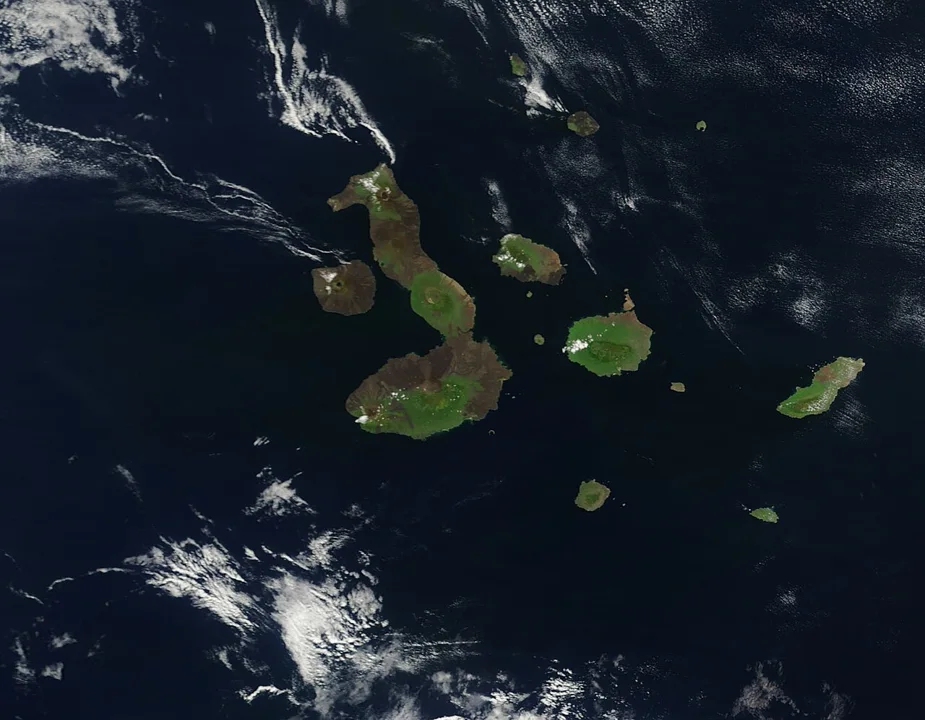

Think about it: Would two neighboring islands necessarily have identical species?
No. Arrival history, habitat differences, isolation and chance can all affect the composition of each island, even when the islands are close by.
Read more: UNESCO World Heritage Centre: Galápagos Islands.