Inside the mechanism
Mercury and Earth are solid rocky worlds, but Jupiter is dominated by hydrogen and helium. Why could one star produce such different planets?
- 4
- Terrestrial planets
- 2
- Gas giants
- 2
- Ice giants
Illustrated walkthrough
See how it works
Dust and gas spread around the young Sun.
Original CurioWander schematic · the illustration is educational, not a scale-accurate simulation.
Interactive 3D study
Turn a textured planetary globe
The globe is a spherical reconstruction projected in three dimensions from the site’s existing planetary texture maps. The view is illustrative: no live spacecraft position, rotation timing, atmosphere dynamics or ring geometry is represented.
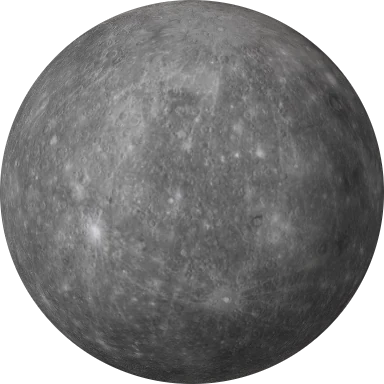
Rotate the globe with the longitude control when the interactive model is available. A still view remains available otherwise.
Start with a dusty disk
When the young Sun formed from a collapsing cloud, material remained in a rotating disk. Small grains collided and accumulated into larger bodies. Temperature varied strongly with distance from the star, and that affected which materials could remain solid.
Rocky worlds near the Sun
In the hot inner part of the disk, dense metallic and rocky material could form solid building blocks when many volatile substances remained gaseous. Mercury, Venus, Earth and Mars assembled from these solids. Each developed its own atmosphere, surface geology and internal structure through later history.
Giants farther from the Sun
In colder regions ice could join dust, providing more solid material with which to assemble large cores. Some became massive enough to retain huge amounts of hydrogen and helium before the disk dissipated. Uranus and Neptune contain a greater proportion of heavier substances than Jupiter and Saturn. Ice giant describes composition, not a frozen solid exterior; their interiors exist under extreme pressure and temperature.
Keep exploring
Further reading: NASA: planet formation