A colony of reef-building coral consists of many small animals that produce mineral skeletons. Over time the accumulating structures provide surfaces, crevices, shelter and food for countless other organisms. A reef is neither a single animal nor an underwater forest of plants; it is a complex living habitat.
Look closely at the builder, not just the reef
A reef can appear as a vast rocky structure from a distance, but living reef-building coral consists of tiny animals. Colonies occupy portions of an accumulated structure that can provide sheltered surfaces, channels and cavities for other organisms. The contrast between an individual coral and a whole reef is one of nature’s remarkable jumps in scale.
A structure created across generations
As colonies grow, mineral material accumulates. Waves, storms, organisms that break down mineral structures and the movement of sediment modify the habitat. A reef is therefore not simply a wall built once; it is a changing balance of growth, wear and geological history. Different parts support different communities.
Living tissue, color and stress
Many shallow reef-building corals interact with algae that live in their tissues and influence nutrition and color. Under stressful conditions, such as sustained heat, those associations can become disrupted and bleaching can occur. A bleached coral is not necessarily dead, but continued stress can make recovery difficult.
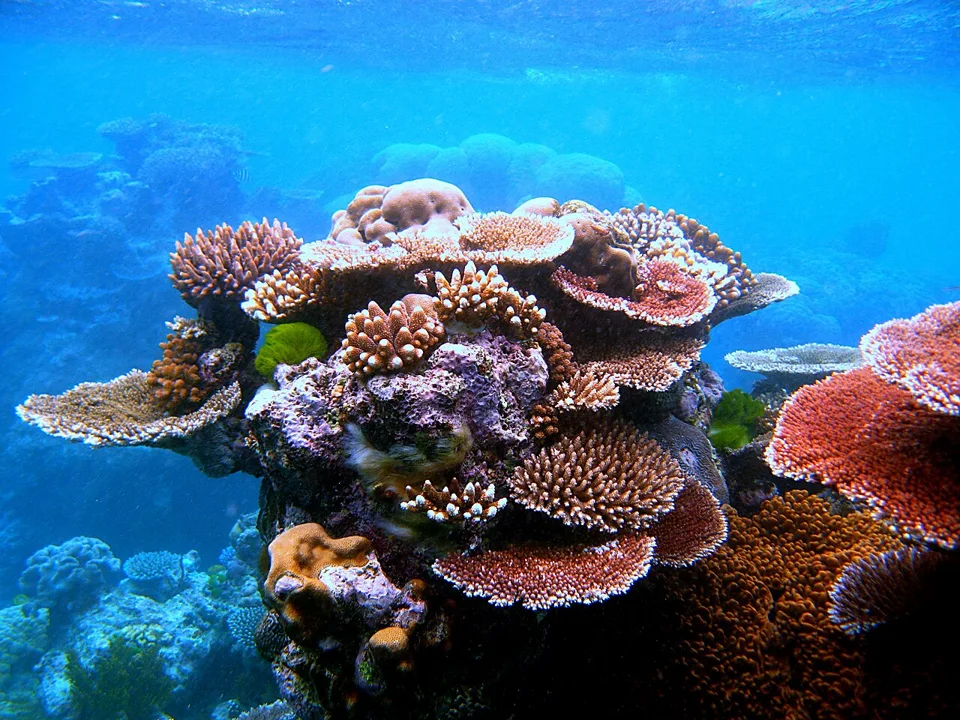

Think about it: Is a coral reef a giant plant?
No. Reef-building corals are animals, often living alongside many other organisms, including photosynthetic partners and algae. Their mineral framework creates habitat for far more than the coral itself.
Read more: Smithsonian: Constructing a coral reef.