The Great Barrier Reef is not a single uninterrupted formation. It encompasses many different reefs, islands and marine habitats across a wide offshore region. The biological and geological processes that sustain this ecosystem are interconnected, so safeguarding it involves attention to land, coastal waters and the wider ocean.
Look at the Great Barrier Reef from different scales
A close-up reveals a coral colony, a diver-sized scene reveals a patch of reef, and an aerial perspective reveals islands, platforms, lagoons and channels. None describes the whole system by itself. The larger protected region encompasses a mosaic of marine environments, not a continuous uninterrupted wall of coral.
Water connects the neighborhoods
Tides, waves and currents move material and organisms between parts of the seascape. The broad configuration of the continental shelf, the position of islands and the depth of water influence which habitats form where. Events on land can also influence the clarity and conditions of water reaching the coast.
Why a living landmark needs care
Reef systems depend on the biological communities that build and occupy their framework. Sustained high water temperatures, poor water quality and other stresses can affect those communities. Assessing recovery requires repeated observations over time and across places; one image of a healthy patch or a damaged patch is not a diagnosis for the entire reef.
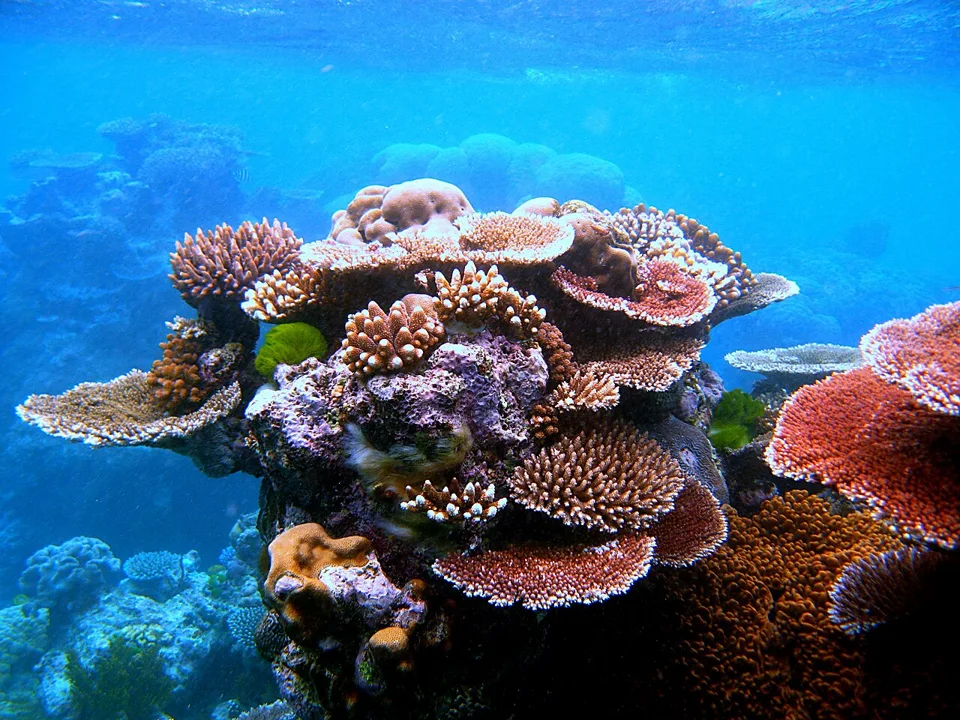

Think about it: Does the reef have to be one continuous formation to be called the Great Barrier Reef?
No. Its name refers to the vast associated system of reefs and habitats along the coast. They are linked through geological setting and marine processes while remaining diverse at smaller scales.
Read more: UNESCO World Heritage Centre: Great Barrier Reef · Australian Institute of Marine Science: Reef monitoring · AIMS: The size and spatial diversity of the reef.