Yellowstone’s spectacular hot springs, mudpots and geysers reflect a combination of unusual geology, a source of underground heat, and groundwater. Some hot-water systems release dissolved minerals at the surface, while others periodically discharge water and steam. These beautiful features are dangerous; explore only from official paths.
A hot landscape above a dynamic interior
Yellowstone’s heat and its abundant groundwater meet in an extraordinary collection of natural features. Precipitation and snowmelt can enter the ground, descend through permeable zones, become heated and then emerge at the surface. The visible features vary with local underground plumbing, rock composition, temperature and water supply.
Why every feature looks different
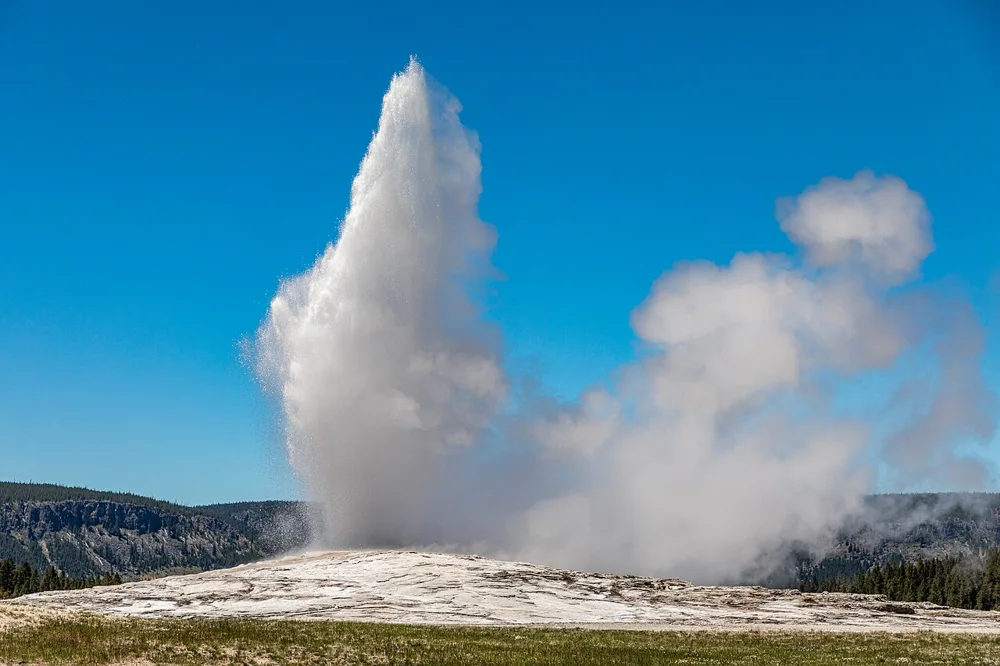
An open flow path may allow hot water to rise in a spring. Other underground arrangements can permit the cycling of water and steam observed in geysers. A relatively water-poor area can produce a steam vent, whereas an area with altered fine material may become a mudpot. These features are not simply different stages of a single universal process.
A living geological landscape
Mineral deposits and microorganisms contribute to the appearance of many hydrothermal features. Conditions at one spring can change, altering its colors and shape. The ground surrounding hot features can be dangerously thin or unstable. For a real-world visit, obey current National Park Service guidance and remain on official routes.

Think about it: If two springs are close to one another, must they behave alike?
No. The rock and water pathways underground can be quite different even if the surface openings are nearby.
Read more: National Park Service: Yellowstone geology.